

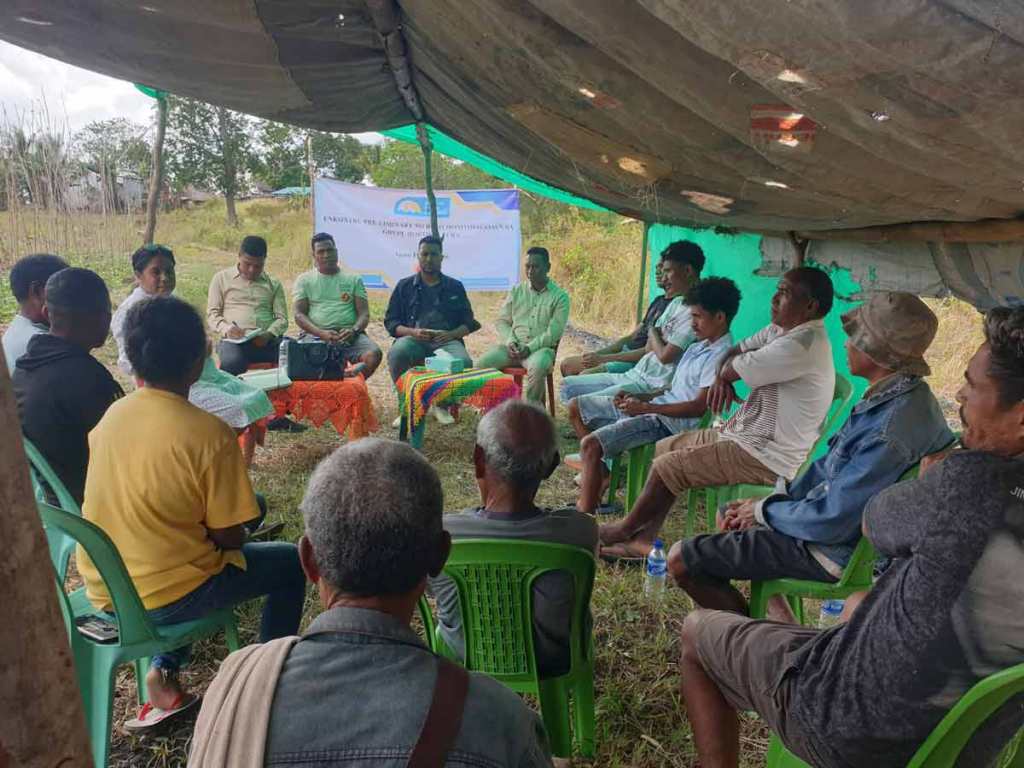
Action for Change Foundation (ACF) continues to empower rural communities in Timor-Leste through its ongoing horticultural project, a collaborative effort with the Civil Society Support Office (GASC). Last Thursday, ACF held a preliminary meeting and monitoring session with local horticulture groups and authorities in the villages of Baucau and Ermera, furthering its commitment to enhancing agricultural practices in these regions.
The meeting, led by GASC’s Mr. Roserio Soares, the Head of the Community Empowerment Department, marked a critical step in the project’s implementation. Attended by key local leaders, including Mr. Narciso da C. Belo, the Chief of Umana-Ullo village, and Mr. Silvestre da Costa, the Chief of Cai-Hulo sub-village, the session provided an opportunity to review the progress of the rural horticultural groups established by ACF.
ACF’s Director emphasized that this initiative, currently piloted in two municipalities, Baucau and Ermera, is a cornerstone of the foundation’s strategy to build sustainable agricultural practices. Each municipality has been carefully selected for its unique potential, with the sub-villages of Cai-Hulo in Baucau and Moris Foun in Ermera chosen as pilot sites. The early success and positive outcomes of these pilot projects are promising, laying the groundwork for ACF’s future plans to establish horticultural centers in these communities.
Local authorities expressed their gratitude to GASC for its financial support, which has been pivotal in enabling ACF to establish and monitor these horticultural groups. They also urged the continuation of such initiatives, emphasizing the importance of expanding the project to other villages. This call for expansion reflects the growing recognition of the project’s value in transforming rural livelihoods.
Mr. Roserio Soares of GASC highlighted the positive impact of the horticultural activities, noting their potential to improve living conditions in rural areas. He stressed that the initiative not only boosts agricultural productivity but also helps families increase their income, enabling them to send their children to school and meet other essential needs.
The success of this pilot project is seen as a model that can be replicated in other communities, where similar horticultural activities can be implemented to foster comparative studies and further improvements. The local leadership has expressed its continued commitment to working with ACF to ensure that these efforts lead to sustainable development and tangible benefits for the communities involved.
As ACF continues to support these horticultural initiatives, it remains dedicated to fostering innovation, cooperation, and community resilience across East Timor. With the foundation’s ongoing efforts and the backing of GASC, there is a bright future ahead for the rural communities of Baucau and Ermera.
ACF’s collaboration with local horticultural groups and authorities in Timor-Leste exemplifies its commitment to sustainable development. By focusing on agriculture, ACF is not only enhancing food security but also promoting economic growth and community empowerment in rural areas. The foundation looks forward to expanding these efforts and ensuring that more communities benefit from this transformative initiative.


 Action for Change Foundation